Cold Chain Mastery: The High-Stakes World of Pharma Retail Logistics
Operational Overview Pharmaceutical retail logistics require absolute thermal stability. Failure results in product degradation. Total loss of inventory is the primary…
Operational Overview
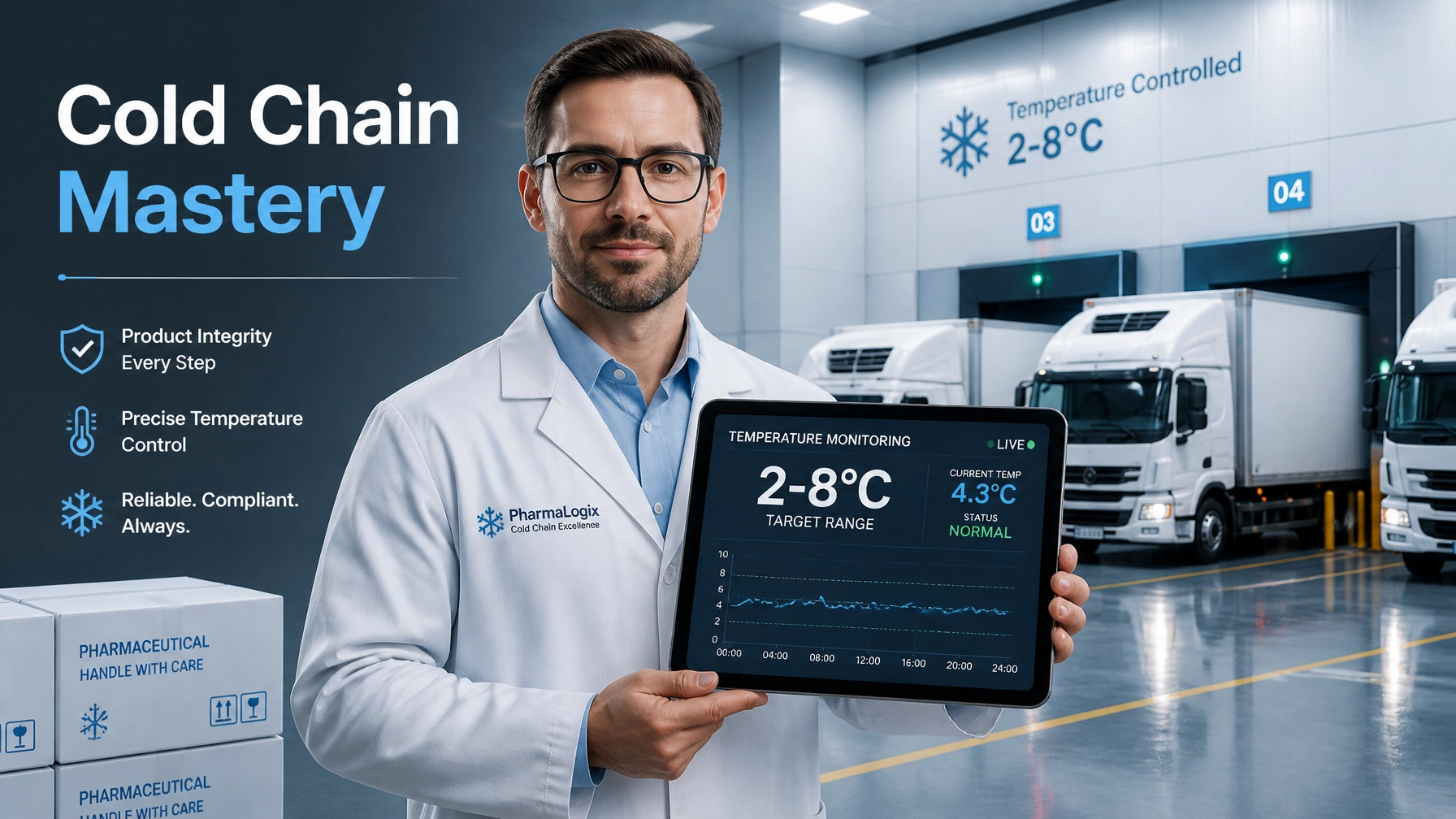
Pharmaceutical retail logistics require absolute thermal stability. Failure results in product degradation. Total loss of inventory is the primary risk. System integrity depends on continuous monitoring.
Cold chain logistics involve the transport of temperature-sensitive products. This includes vaccines, biologics, and specialized medications like GLP-1 agonists. The margin for error is zero.
Compliance: GDP and Regulatory Requirements
Good Distribution Practice (GDP) is the operational baseline. Regulatory bodies mandate strict adherence to these standards.
- Documentation: All temperature data must be logged. Records must be tamper-proof.
- Validation: Equipment must be tested and certified. This includes refrigerated vehicles and storage units.
- Audit Readiness: Systems must provide instant access to historical thermal data.
- Chain of Custody: Every handoff must be recorded. Lack of data creates a compliance gap.
Regulatory pressure is increasing. GDP now requires real-time visibility. Passive logging is no longer sufficient for high-value pharma retail.
Technology: High-Precision IoT Sensors
Legacy systems use manual logs. Modern systems use IoT sensors.
- Accuracy: Sensors must maintain ±0.5°C precision.
- Intervals: Data capture should occur every 1 to 5 minutes.
- Parameters: Monitoring includes temperature, humidity, and light exposure.
- Connectivity: Devices must support cellular or LoRaWAN protocols for constant transmission.
Try integrating fleet management software to centralize sensor data. Data silos lead to missed excursions.
Thermal Stability: Managing Biologics and GLP-1
High-value medications have narrow stability windows. Most require 2°C to 8°C. Some require sub-zero storage.
- Biologics: Protein-based drugs are sensitive to heat and freezing.
- GLP-1 Agonists: High demand in retail pharma. Requires precise last-mile orchestration.
- Insulin: High-volume retail item. Vulnerable to freezing during transport.
Inconsistent temperatures trigger chemical changes. The medication becomes ineffective or toxic. This is a safety hazard.
Risk Management: Preventing Temperature Excursions
An excursion is a deviation from the required temperature range. Systems must detect these immediately.
Automatic Alerts
Configure your system to trigger alerts.
- Warning Thresholds: Notify managers when temperature approaches limits (e.g., 2.5°C or 7.5°C).
- Critical Alerts: Trigger when limits are breached.
- Communication: Use SMS, email, and push notifications.
Predictive Analytics
Analyze historical reefer performance. Identify units with high failure rates. Perform maintenance before the next route. Use data to predict risky lanes.
Corrective Actions
- Verify sensor functionality.
- Inspect reefer unit settings.
- Transfer cargo to a backup vehicle if the primary unit fails.
- Log the event for quality assurance.
System Integration: Fleetroot Orchestration
Efficiency requires a unified platform. Disconnected apps cause delays.
The Fleetroot logistics orchestration platform manages end-to-end processes. This includes planning, tracking, and compliance.
- Centralized View: See all refrigerated assets on one dashboard.
- Real-Time Tracking: Monitor location and temperature simultaneously.
- Automated Reporting: Generate GDP-compliant reports with one click.
- Last-Mile Precision: Ensure retail deliveries reach pharmacies within spec.
Implementation: Actionable Instructions
Follow these steps to upgrade your cold chain.
Step 1: Hardware Audit
Examine all current sensors. Replace devices with accuracy lower than ±0.5°C. Ensure all reefer units are serviced.
Step 2: System Configuration
Integrate sensors with your logistics platform. Set your temperature thresholds. Test the alert system. Disable any extensions that block real-time data feeds.
Step 3: Staff Training
Drivers must understand reefer operations. Warehouse staff must verify pre-cooling before loading. Every team member must follow the SOP.
Step 4: Route Optimization
Reduce dwell times. Long stops increase excursion risk. Use route optimization tools to minimize transit time. High-density routes reduce fuel consumption and maintain thermal stability.
Technical Specifications for 2026
Modern pharma logistics operate on these specs:
| Feature | Specification |
|---|---|
| Sensor Accuracy | ±0.5°C or better |
| Transmission Frequency | Every 1-5 Minutes |
| Battery Life | 2+ Years for IoT tags |
| Protocol | MQTT / HTTPS / 5G |
| Data Storage | Cloud-based, 7+ years retention |
Summary of System Actions
The cold chain is a technical challenge. It requires high-precision hardware and robust software. Precision is non-negotiable.
System status: Operational.
Compliance status: Monitored.
Action required: Review current sensor accuracy.
Sorry, manual logs are no longer supported by modern compliance standards. It's just an accident that some companies still use them, but it was not intentional to fall behind. Upgrade your systems to maintain market access.
See this in action on your own fleet.
14-day free trial. No credit card. Unlimited riders.