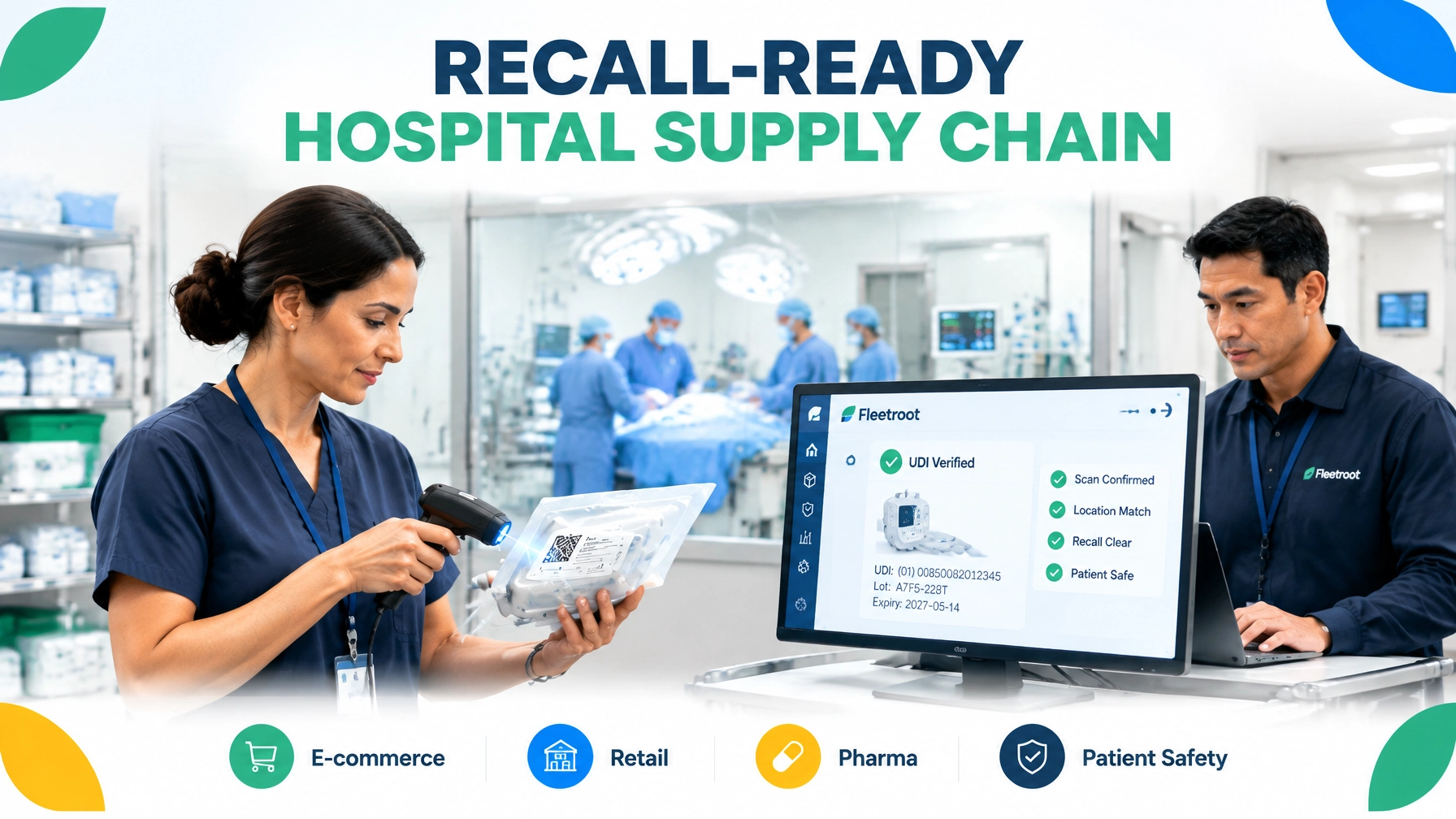
Serialization and Delivery Verification: Complying With DSCSA and EU FMD Without Slowing Your Dispatch
Pharmaceutical logistics now depends on packagelevel visibility. Lot numbers are no longer enough for regulated medicine movement. Healthcare distributors, 3PLs, and pharma…
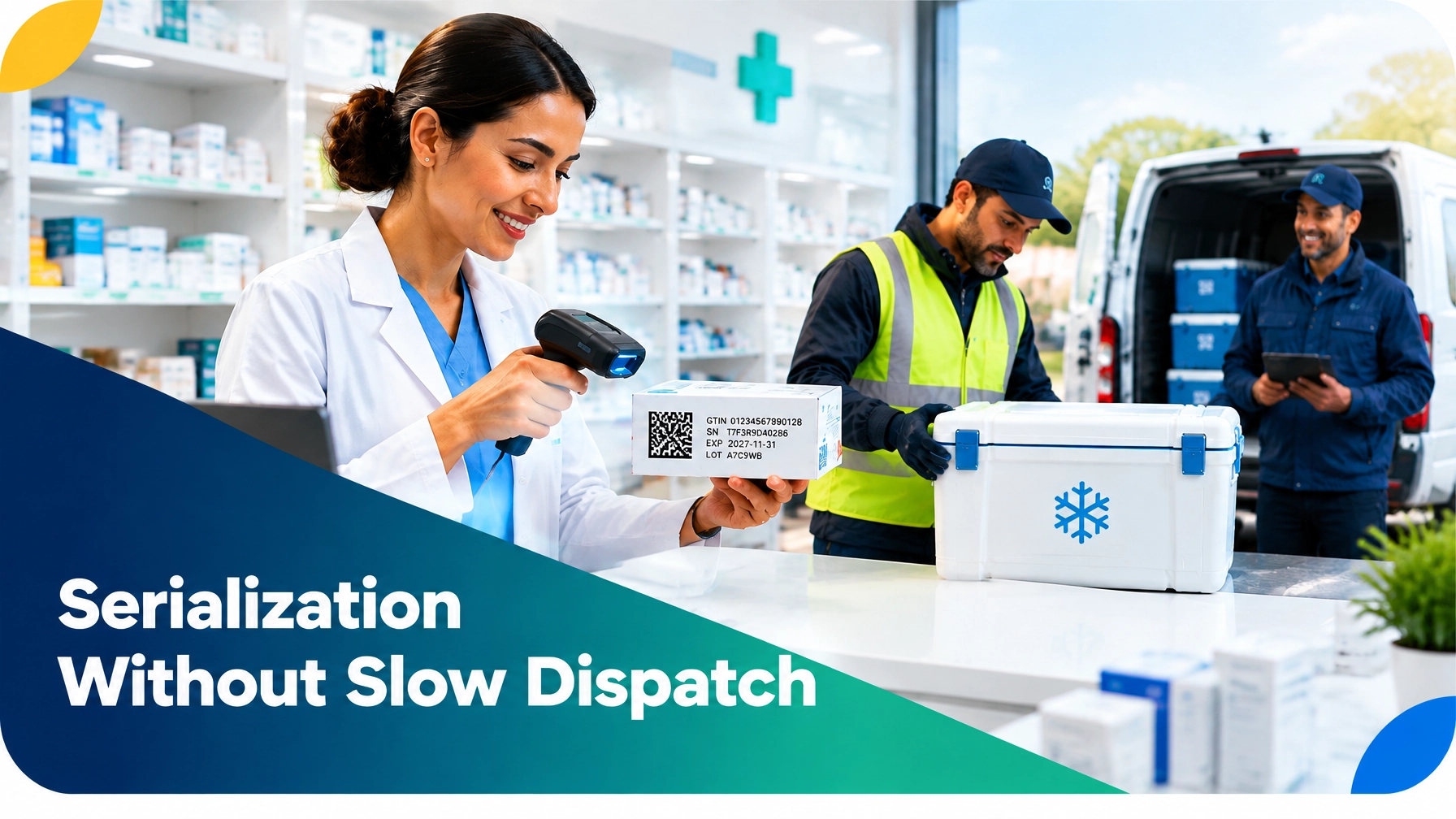
Pharmaceutical logistics now depends on package-level visibility.
Lot numbers are no longer enough for regulated medicine movement. Healthcare distributors, 3PLs, and pharma retailers must identify each saleable unit, verify status, and retain an auditable event history. The two main frameworks work differently. DSCSA requires interoperable package-level traceability across the U.S. supply chain. EU FMD requires pack verification and decommissioning at the point of supply in Europe. Both depend on serialized data, reliable scanning, and clean system integration. The operational target is the same: keep compliance inside the normal workflow so warehouse and pharmacy teams can verify product without slowing dispatch.
Serialization is different from lot-level traceability
Lot traceability identifies a batch. Serialization identifies one specific pack.
A typical GS1 DataMatrix includes:
- GTIN or product code
- Serial number
- Lot or batch number
- Expiration date
Common GS1 Application Identifiers:
(01)GTIN(10)lot or batch(17)expiration date(21)serial number
Lot records answer:
Which products came from batch 12345?
Serialized records answer:
Where is serial ABC123, who handled it, and whether it was supplied, returned, blocked, or recalled?
That difference matters in regulated operations. Lot-only workflows usually create broad holds. Serialized workflows allow targeted verification and auditable package history.

DSCSA requires package-level traceability
DSCSA requires an electronic, interoperable method for tracing covered prescription drugs through the U.S. supply chain. The product identifier is tied to the package and typically includes:
- National Drug Code or equivalent product identifier
- Serial number
- Lot number
- Expiration date
Operationally, teams must do four things:
- Receive serialized shipment data.
- Match physical packs to transaction data.
- Record shipment and receipt events.
- Produce evidence during investigations or recalls.
Use the FDA DSCSA product tracing requirements as the reference point. GS1 EPCIS is commonly used for event exchange. An API layer should connect WMS, order systems, carrier apps, and serialization repositories without manual re-entry.
EU FMD adds verification and decommissioning
EU FMD uses a repository model. Manufacturers upload identifier data to the European Medicines Verification System, and connected national repositories support pharmacies and other authorised stakeholders.
At the point of supply, the pharmacy must:
- Scan the 2D DataMatrix.
- Verify the identifier.
- Confirm active status.
- Decommission the identifier and supply the medicine.
Decommissioning changes the pack from active to no longer saleable in the repository. See Commission Delegated Regulation (EU) 2016/161 and EMVO. Wholesalers do not normally decommission active packs sent to pharmacies. Exceptions exist, but routine dispatch is not one of them.
Treat decommissioning as a controlled event
Decommissioning fails when it is tied to the wrong operational step.
Common failures:
- Decommissioning a pharmacy-bound pack at the wholesaler
- Decommissioning before order confirmation
- Treating a local app response as repository confirmation
- Reusing a serial after cancellation or failed delivery
Keep these events separate: pick, pack, dispatch, delivery, supply, verification, and decommissioning. The system should not infer one event from another. A dispatch scan must not trigger EU FMD decommissioning unless the transaction is a valid exception. Under DSCSA, dispatch supports traceability, but it is not the same action.
Design for poor connectivity
Healthcare logistics often runs in low-signal locations. The app should support:
- Local scan capture
- Timestamp, location, and user/device identity
- Encrypted local storage with automatic retry
- Sync status visibility and duplicate prevention
The status must distinguish captured locally, queued, accepted by platform, and verified by repository. For EU FMD, a queued scan is not a verified pack. Do not treat local capture as repository confirmation.
Use Fleetroot’s logistics solutions and features as reference points for connecting real-time tracking, task management, and operational events in one workflow.
Protect throughput at the pharmacy and hub
Compliance slows dispatch when it is treated as a separate process. Keep it inside the normal task flow:
- Scan once during the working step
- Show only exceptions to operators
- Avoid duplicate scans across connected systems
- Keep pharmacy verification at the correct supply event
The goal is simple: fewer repeated scans, fewer manual entries, and fewer unresolved exceptions. Compliance should support throughput, not compete with it.
FAQ
Is lot-level traceability enough for DSCSA?
No. DSCSA requires package-level traceability, so lot data alone is not sufficient.
Does EU FMD require wholesalers to decommission every pack at dispatch?
No. Packs sent to pharmacies usually stay active until verification and decommissioning at the point of supply.
Can scanning work without an internet connection?
Yes. Scans can be captured offline and synced later, but queued local capture is not the same as repository-confirmed verification.
A controlled serialization process should support compliance without creating a second manual operation. Use the correct verification event, capture evidence automatically, and keep dispatch moving.
See this in action on your own fleet.
14-day free trial. No credit card. Unlimited riders.