GCC Logistics Trends 2026: 7 Technologies Reshaping Delivery Operations
System State: GCC Logistics Landscape 2026 The logistics market in the GCC has shifted. Saudi Arabia and the UAE are primary nodes. Market valuation for freight and…
System State: GCC Logistics Landscape 2026
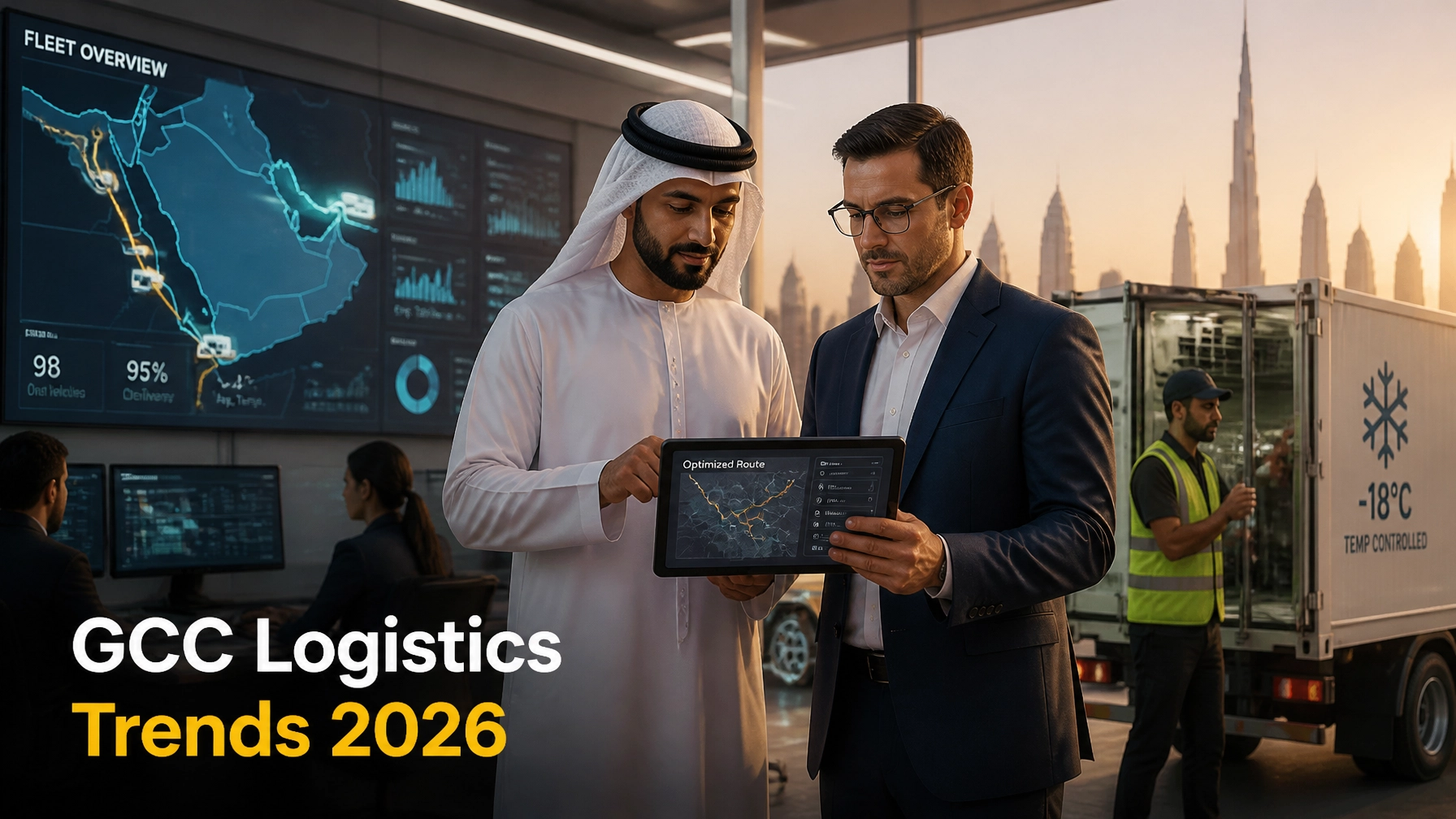
The logistics market in the GCC has shifted. Saudi Arabia and the UAE are primary nodes. Market valuation for freight and logistics is projected at USD 89.32B for the 2026 period. Urbanization and e-commerce volumes drive this growth. Digitalization is no longer optional. Logistics technology is the core operating layer. This report identifies seven technologies reshaping the industry.
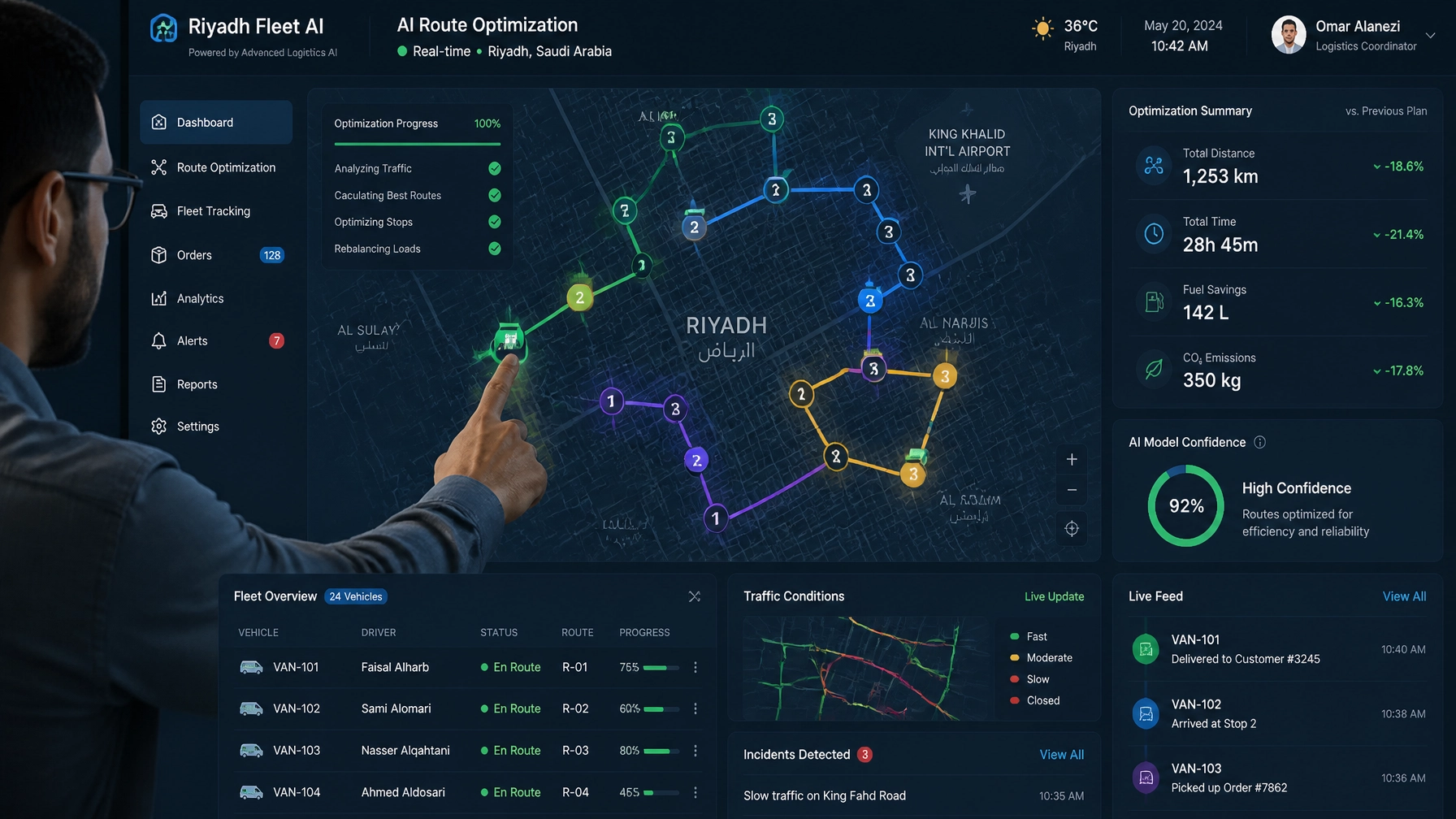
AI Controls Route Planning
Manual routing is obsolete. High stop density and traffic volatility in cities like Riyadh and Dubai require dynamic computation. AI-powered route planning processes multi-dimensional data sets.
- Traffic Inputs: Real-time congestion data from telematics and public APIs.
- Capacity Logic: Balancing vehicle volume against parcel dimensions.
- Time Windows: Hard constraints for premium delivery SLAs.
AI algorithms execute thousands of permutations in milliseconds. This reduces fuel consumption by up to 20%. It increases stops per driver. Deploy delivery management software to automate these calculations. Do not rely on human intuition for high-scale urban distribution.
Data Drives ETA Accuracy
Customer satisfaction depends on timing. Estimated Time of Arrival (ETA) must be precise. Traditional ETAs use static distance/speed math. This is insufficient. Smart logistics platforms now use machine learning for predictive ETA.
- Historical Analysis: Comparing past performance on specific route segments.
- Wait-Time Factor: Calculating duration spent at security gates or loading docks.
- Driver Behavior: Accounting for individual driving patterns.
System-calculated ETAs update in real-time. If a delay occurs, the system triggers automated notifications to the recipient. This eliminates "where is my order" (WISMO) inquiries. It reduces the load on customer service teams.
Digital Proof Replaces Paper
Paper-based logs are a system failure. They introduce data lag. Digital Proof of Delivery (POD) provides immediate verification.
- Contactless Signatures: Captured via mobile applications.
- Photo Evidence: High-resolution images of delivered parcels at doorsteps.
- Geofencing: Validation that the driver was at the correct GPS coordinate during delivery.
Integrating digital POD into your fleet management system ensures 100% visibility. Data syncs to the central database instantly. This accelerates the billing cycle. It removes disputes regarding missing or damaged items.
Sensors Secure Cold Chain
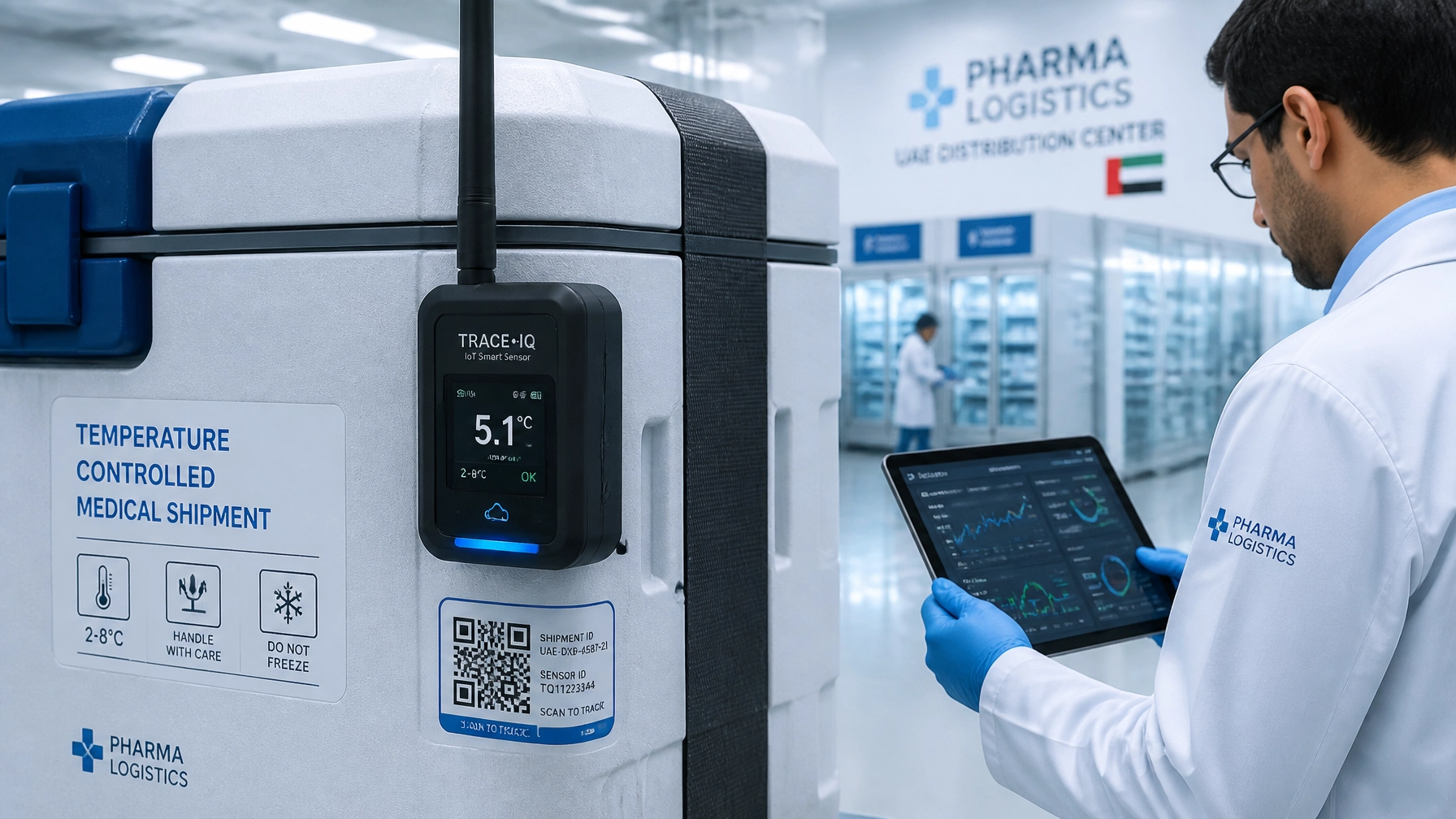
The GCC climate poses a high risk to perishables and pharmaceuticals. Temperature deviations cause product loss. Cold-chain monitoring is now a continuous IoT process.
- IoT Sensors: Real-time temperature and humidity tracking.
- Automated Alerts: System triggers when thresholds are breached.
- Compliance Logs: End-to-end temperature history for regulatory audits.
Maintaining a secure cold chain is critical for pharmacy retail and food distribution. Use telematics solutions to link engine data with reefer performance. If the cooling unit fails, the system identifies the nearest service point or replacement vehicle.
Fleet Health Predicts Failure
Reactive maintenance increases downtime. Predictive fleet maintenance uses sensor data to forecast parts failure.
- Engine Diagnostics: Monitoring RPM, oil pressure, and coolant levels.
- Tire Pressure Systems: Preventing blowouts through continuous monitoring.
- Brake Wear Analysis: Scheduling service before mechanical failure occurs.
Connect your hardware to a fuel monitoring system to detect abnormal consumption patterns. This often indicates engine inefficiency. Predictive models reduce maintenance costs by 15%. They extend the lifespan of the vehicle asset.
Automation Handles Dispatch
Manual dispatching creates bottlenecks. Autonomous dispatch systems assign tasks based on proximity, load, and priority.
- Load Balancing: Evenly distributing work across the active fleet.
- Urgency Logic: Prioritizing medical or express deliveries automatically.
- Driver Availability: Checking active hours to ensure compliance with rest regulations.
System-led dispatching removes human bias. It ensures the most efficient driver always receives the most logical task. This is essential for 3PL providers managing thousands of daily deliveries.
Sustainability Scales with EVs
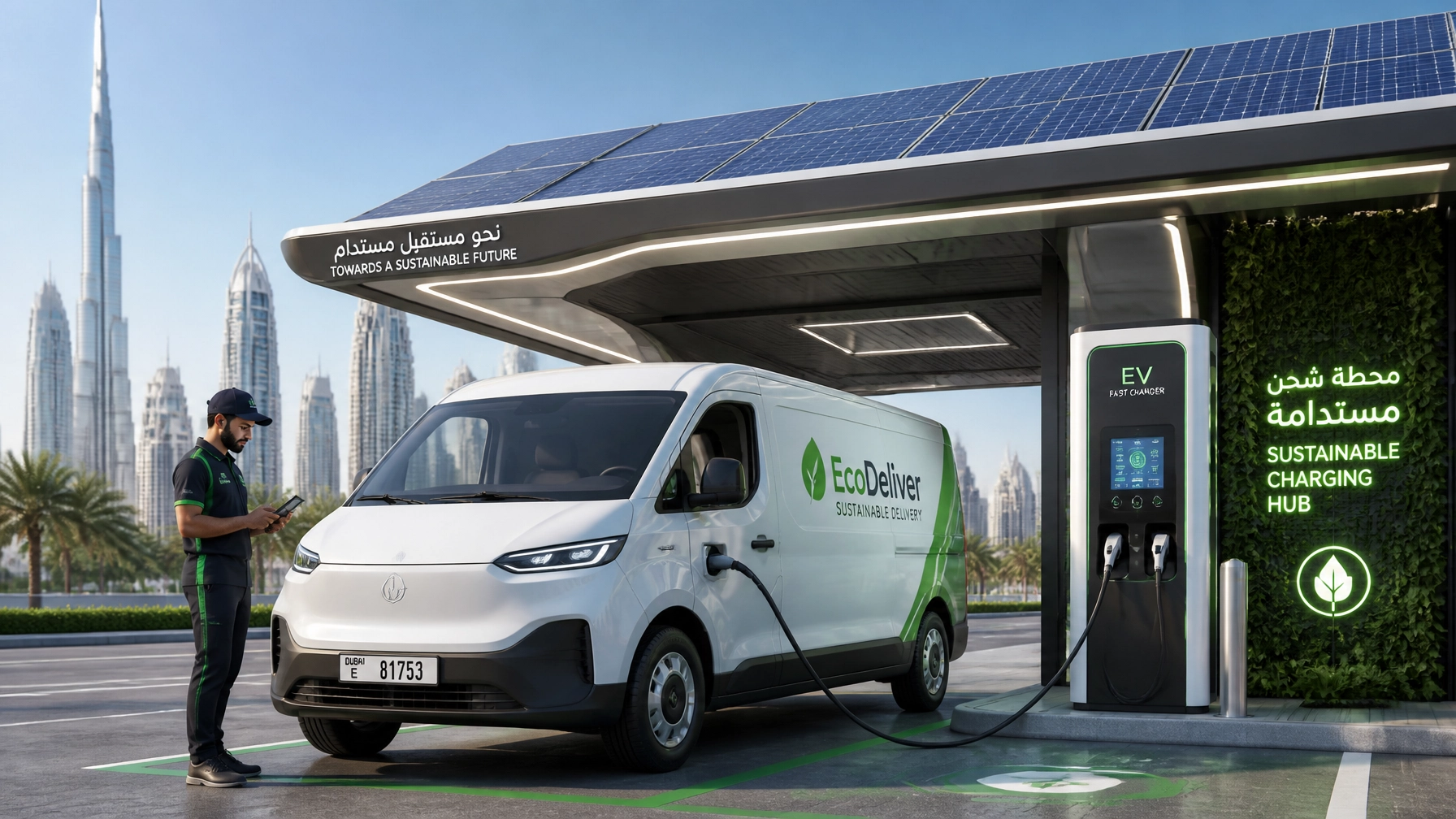
Decarbonization is a regulatory requirement in the GCC. Electric Vehicle (EV) fleets are scaling. Sustainability is now a data-driven metric.
- Range Optimization: AI planning to maximize battery life.
- Charging Integration: Incorporating charging stops into the delivery route.
- Emission Reporting: Automated calculation of CO2 savings for ESG reports.
EV adoption reduces long-term operational costs. It aligns with Saudi Vision 2030 and UAE Net Zero 2050 initiatives. Start by piloting EVs in last-mile urban loops. Track performance metrics against traditional internal combustion engine (ICE) vehicles.
Operational Instruction: Execute Modernization
The transition to smart logistics requires an orchestration platform. Disconnected systems create data silos. Unified operations provide a single source of truth.
- Review current manual processes.
- Identify bottlenecks in routing and dispatch.
- Deploy integrated IoT sensors for cold-chain and fleet health.
- Switch to digital POD for all delivery types.
- Analyze emission data to plan EV transitions.
Failure to adopt these technologies results in operational inefficiency. The 2026 logistics landscape rewards automation. It penalizes manual intervention. Sorry, the legacy methods of managing logistics are no longer sustainable. It is an accident of progress that manual systems are now obsolete.
System Summary
The GCC logistics sector is evolving through AI, IoT, and sustainability. These 7 technologies are the baseline for 2026 operations. Integrate these modules to maintain market competitiveness. Use Fleetroot to consolidate these functions into a single logistics orchestration layer.
See this in action on your own fleet.
14-day free trial. No credit card. Unlimited riders.