Pharma retail logistics is a high-stakes environment. Standard delivery strategies do not apply here. The dispatch of goods in this sector involves strict regulatory compliance, temperature sensitivity, and patient safety requirements. Failure leads to product spoilage, legal penalties, or clinical risk. Mastering this process requires a transition from manual oversight to automated, data-driven orchestration.
The High Stakes of Pharma Dispatch
Pharma dispatch is not about moving boxes. It is about maintaining a controlled, verifiable flow of medicines. Product integrity is the primary constraint.
Key Differentiators in Pharma Logistics
- Strict Temperature Control: Many pharmaceutical products require specific thermal ranges. Exposure to ambient temperatures outside these ranges renders the product useless.
- Regulatory Frameworks: Operations must comply with Good Distribution Practice (GDP) and regulations like the DSCSA or FMD.
- Zero-Error Tolerance: Picking a wrong dosage or an expired item is a life-critical error.
- Security: High-value drugs and controlled substances are prone to diversion and require a strict chain of custody.
Stage 1: Order Planning and Wave Management
Effective dispatch starts before a single item leaves the shelf. Advanced planning reduces dock congestion and ensures time-sensitive items spend minimal time in staging.
Order Prioritization
Group orders based on specific criteria. Use your WMS or dispatch software to automate this.
- Urgency: Prioritize "STAT" orders for hospitals or clinics.
- Route Alignment: Group orders destined for the same geographical zone to optimize vehicle utilization.
- Thermal requirements: Separate cold-chain items from ambient goods to ensure specialized handling.
Carrier and Vehicle Allocation
Match the order to the correct asset. Ambient drugs go in standard vans. Vaccines go in refrigerated units.
- Capacity Planning: Reserve dock space and labor based on incoming order volume.
- Constraint Checking: Verify that the assigned vehicle meets the necessary security and temperature certifications for the load.
Stage 2: Validated Picking and Consolidation
Errors in the picking stage propagate through the entire supply chain. Use technology to enforce accuracy.
Enforcing FEFO Logic
First-Expired, First-Out (FEFO) is the standard. Use a digital system to block pickers from selecting items with short shelf lives or those near expiration.
- Barcode/2D Scanning: Require a scan for every item. This confirms the SKU, lot number, and serial number.
- Zone Picking: Divide the warehouse into specialized zones (e.g., cold room, ambient, controlled substances) to minimize cross-contamination and improve speed.
Order Consolidation
Merge lines into single shipments.
- Consolidation Lanes: Designate specific floor areas for orders waiting for their transport window.
- Temperature Segregation: Keep refrigerated items in active cooling until the vehicle is ready for loading. Do not leave cold-chain boxes on an ambient dock for extended periods.

Stage 3: Documentation and Compliance Verification
Pharma dispatch requires a comprehensive audit trail. A "clean" paper or digital trail is mandatory for GDP compliance.
Mandatory Documentation
- Transport Manifests: Clear lists of all items per vehicle.
- Chain of Custody Logs: Specific logs for controlled substances.
- GDP Declarations: Statements confirming the goods were handled according to thermal and safety standards.
System Reconciliations
Ensure the physical load matches the digital record.
- Decommissioning: For serialized products, verify the system has marked the packs as "dispatched."
- Automated Verification: Use the dispatch platform to flag discrepancies between the packing list and the loaded items immediately.
Stage 4: Loading and Dispatch Execution
The point of handover is the most vulnerable time for pharma goods. Standardize the loading process to mitigate risk.
Loading Sequence
Follow "Last Off, First In" (LOFI) logic based on the pre-planned route.
- Scan at Loading: Scan each box as it enters the vehicle. This updates the status in the central system to "In Transit."
- Thermal Validation: Check the vehicle’s temperature log before loading sensitive goods. Do not load if the internal temperature is outside the target range.
Tamper-Evident Measures
Use seals and locks. Record seal numbers on the dispatch note. Any broken seal during the transit phase must trigger an immediate investigation.
Stage 5: Mastering Last-Mile Delivery Strategies
The last mile is where most logistics costs and risks occur. For pharma retail, visibility is the priority.
Real-Time Visibility
Traditional "track and trace" is insufficient. Real-time visibility provides active status updates for both the dispatcher and the end-recipient.
- GPS Tracking: Monitor the vehicle's exact location.
- Geofencing: Automate alerts when a vehicle enters or leaves a delivery zone.
- ETA Updates: Provide pharmacies and patients with dynamic arrival times based on current traffic and route progress.
Route Optimization
Pharma routes must account for more than distance. They must account for time-to-delivery constraints for cold-chain items.
- Dynamic Re-routing: Adjust paths in real-time to avoid traffic delays that could compromise product stability.
- Windows-Based Delivery: Respect the specific receiving hours of clinics and pharmacies to avoid "failed delivery" scenarios.


Stage 6: Proof of Delivery and Chain of Custody
The delivery process is not complete until a verified handover occurs.
Electronic Proof of Delivery (ePOD)
Eliminate paper logs. Use mobile applications to capture:
- Digital Signatures: Required for all pharma deliveries.
- ID Verification: Mandatory for high-risk medications or controlled substances.
- Timestamp and Geolocation: Record exactly where and when the handover occurred to prevent disputes.
Handling Delivery Exceptions
Things go wrong. You need a standard protocol for exceptions.
- Rejected Shipments: If a pharmacy rejects a shipment due to a damaged box or temperature excursion, the system must immediately log the reason and initiate a return-to-origin (RTO) workflow.
- Failed Attempts: If a patient is not home for a B2C delivery, sensitive items should not be left on the doorstep. They must be returned to a controlled environment immediately.
The Technology Stack for Pharma Mastery
You cannot manage this scale with spreadsheets. A modern logistics orchestration platform is necessary.
| System Type | Function in Pharma Dispatch |
|---|---|
| WMS | Inventory control, FEFO enforcement, serial number tracking. |
| TMS / Last-Mile | Route planning, driver management, ePOD, real-time tracking. |
| IoT Sensors | Continuous temperature and humidity monitoring in transit. |
| Serialization Layer | Compliance with DSCSA/FMD regulations. |
Data Integration and Collaboration
Ensure all systems talk to each other via API. Information must flow from the WMS to the last-mile platform without manual data entry. Manual entry creates errors. Errors in pharma lead to waste.
Operational KPIs for Success
Measure what matters. In pharma, accuracy and compliance are as important as speed.
- On-Time In-Full (OTIF): Percentage of orders delivered exactly as requested and on time.
- Pick Accuracy: Measure the rate of errors in the warehouse. Target should be 99.9%.
- Temperature Excursion Rate: The frequency of shipments falling outside thermal limits.
- First-Attempt Delivery Rate: Crucial for B2C home deliveries to minimize product returns.
- Documentation Compliance: Percentage of deliveries with perfect digital audit trails.
Conclusion: Systematizing Efficiency
Mastering the dispatch of goods in pharma retail is about process discipline. Implement a digital-first strategy. Remove human decision-making where algorithms perform better: specifically in route planning and expiry management.
Use your logistics platform to enforce SOPs. If a driver skips a signature, the system should block the task completion. If a temperature sensor alerts, the dispatcher should see it instantly.
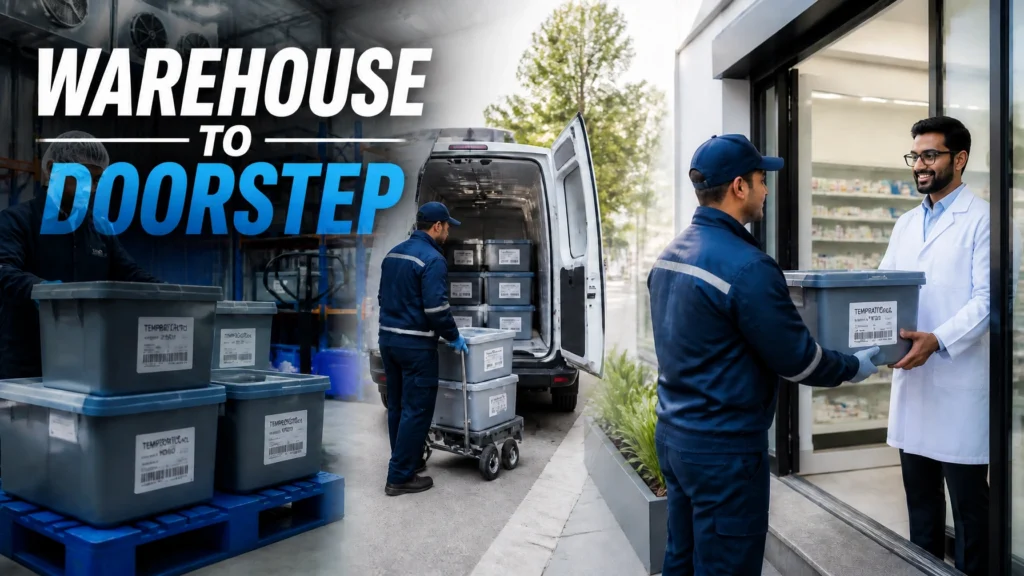
Logistics orchestration platforms like Fleetroot provide the visibility and control required to turn a complex warehouse-to-doorstep journey into a standard, repeatable, and safe operation. Stop managing by accident. Start managing by data.
Try optimizing your routing. Try automating your dispatch. It is the only way to scale in pharma retail.