Operational efficiency now incorporates environmental impact as a primary metric. Sustainability is no longer a peripheral corporate social responsibility (CSR) goal. It is a core performance indicator for Third-Party Logistics (3PL) providers. Shippers require measurable carbon reduction to meet global ESG (Environmental, Social, and Governance) standards. Failure to provide this data results in contract termination or RFP exclusion.
Sustainability in logistics is an engineering problem. The objective is to maximize throughput while minimizing energy consumption. This is achieved through route density, network optimization, and fleet electrification.
Carbon Footprint Reduction via Network Orchestration
Carbon emissions in logistics are directly proportional to fuel consumption and total distance traveled. Reducing the carbon footprint requires high-level logistics orchestration. Manual planning processes are insufficient for this task.
Telemetry and Data Inputs
System performance depends on data quality. Integrate the following telemetry inputs to calculate baseline emissions:
- Fuel consumption per kilometer (FC/km)
- Engine idling time (EIT)
- Vehicle weight and load factor (LF)
- Tire pressure monitoring system (TPMS) data
- Route gradient and elevation profiles
Optimization Algorithms
Apply heuristic algorithms to solve the Vehicle Routing Problem (VRP) with environmental constraints. Traditional VRP focuses on the shortest path. Green VRP (G-VRP) prioritizes the path with the lowest CO2 emission. This often includes avoiding high-traffic zones during peak hours to reduce idling time.
Try implementing these steps:
- Connect vehicle GPS modules to the central orchestration platform.
- Enable real-time traffic data feeds via API.
- Set "Minimum CO2" as the primary objective function in the routing engine.
- Monitor deviation from optimized routes.
Route Density and the Elimination of Empty Miles
Empty miles represent a 100% loss in both capital and environmental efficiency. A vehicle moving without cargo consumes fuel and generates emissions with zero utility. Route density is the solution.
Load Consolidation and Pooling
Increase route density by consolidating shipments. Use last-mile transportation solutions to group deliveries by geographic proximity rather than order time. This reduces the number of unique trips required to service a zone.
- Cross-Customer Pooling: 3PLs can co-locate freight from multiple clients on a single vehicle. This increases the load factor.
- Backhaul Management: Use predictive analytics to find return loads. An empty return leg is an avoidable system failure.
- Dynamic Slotting: Adjust delivery windows to align with existing routes in the same area.
Systemic Impact of Route Density
Higher density reduces the total distance per parcel. If a driver makes 20 stops in a 5km radius instead of a 20km radius, the carbon intensity per unit drops significantly. This is just a basic calculation that any automated system should perform by default.
Eco-friendly Last-Mile Delivery Architectures
The last mile is the most carbon-intensive segment of the supply chain. It often involves stop-and-go driving in congested urban environments. This is where 3PLs must deploy specific technological interventions.
Electric Vehicle (EV) Fleet Integration
Transitioning to EVs removes tailpipe emissions. However, EV integration requires a different management logic:
- Range Constraints: Routes must be planned based on battery state-of-charge (SoC).
- Charging Infrastructure: Charging cycles must be integrated into driver shifts to prevent downtime.
- Payload Sensitivity: EVs have different weight capacities due to battery weight. Update your vehicle profiles in the management system to avoid overloading.
Micro-Fulfillment and Urban Hubs
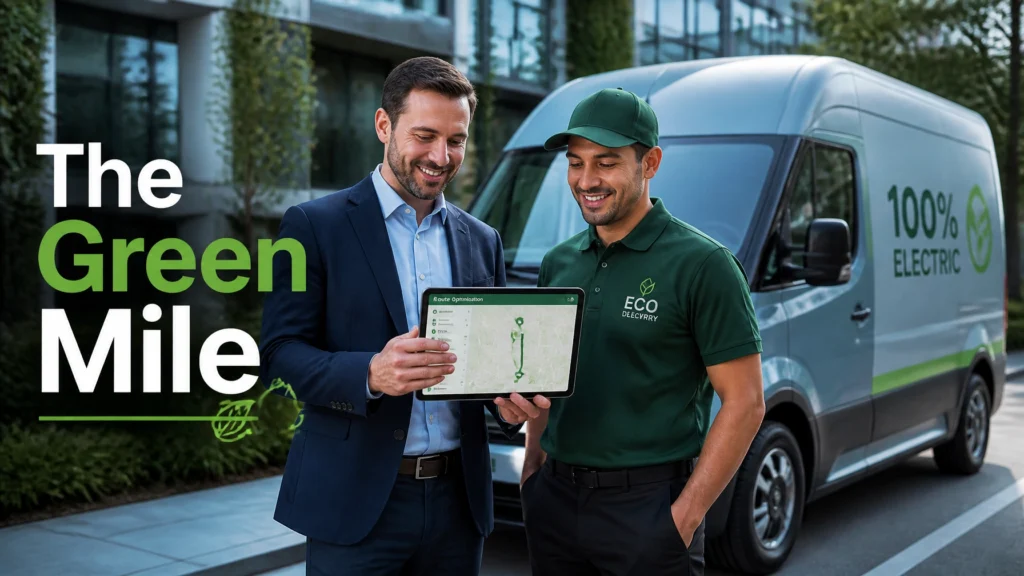
Moving inventory closer to the end consumer reduces the "Green Mile" length.
- Micro-Fulfillment Centers (MFCs): Small, automated warehouses in city centers.
- Cargo Bikes and E-scooters: Use these for ultra-dense urban zones where vans are inefficient.
- Geo-fencing: Use geo-fencing to trigger mode-switches (e.g., switching from a truck to a bike at a hub).
If you are not using MFCs yet, your system latency in delivery times is likely too high. Fix this by re-allocating inventory based on historical demand heatmaps.
Competitive Edge: Sustainability as a Service (SaaS)
3PLs that provide transparent sustainability reporting win more business. Customers want to see the "Carbon Per Parcel" metric on their dashboards.
Automated ESG Reporting
Don't calculate emissions manually. It’s a waste of time and prone to error. Use an automated reporting module:
- API Integration: Feed fuel and mileage data directly into ESG platforms.
- Customer Portals: Provide shippers with real-time access to their specific carbon savings.
- Certifications: Use the data to apply for ISO 14001 or LEED certifications.
RFP Advantage
Modern RFPs (Request for Proposals) allocate significant weight to sustainability. A 3PL with an electrified fleet and high route density will outrank a cheaper, less efficient competitor. It's a simple market correction toward efficiency.
Actionable Instructions for 3PL Managers
To transition your operations to a "Green Mile" model, follow these steps:
- Audit Current Latency: Identify where vehicles are idling or taking sub-optimal routes.
- Update Fleet Profiles: Enter precise fuel and emission data for every vehicle in your database.
- Enable Route Optimization: Disable manual route planning. Use the system's algorithm to prioritize density.
- Install Telemetry: If your vehicles aren't connected, you are flying blind. Install IoT sensors for real-time tracking.
- Test Micro-Hubs: Start with one urban hub. Measure the reduction in stem mileage.
- Communicate Metrics: Send monthly carbon reduction reports to your top 10 clients.
Sorry if your current system doesn't support these features; it might be time for an upgrade.
Technical Summary of Green Logistics Parameters
| Parameter | Unit | Target Trend | Impact |
|---|---|---|---|
| Route Density | Drops per KM | Increase | Lower fuel cost per unit |
| Empty Miles | % of Total KM | Decrease | Higher asset utilization |
| Engine Idling | Minutes | Decrease | Direct carbon reduction |
| Load Factor | % Capacity | Increase | Optimized throughput |
| Battery SoC | % | Optimized | EV reliability |
The transition to green logistics is a technical requirement. It is driven by necessity and regulated by demand. Optimize your network now or face obsolescence.