The healthcare logistics sector in the GCC is experiencing rapid expansion. Market data indicates a projected CAGR of 8.65% through 2031. This growth is driven by increased healthcare spending in Saudi Arabia and the UAE, alongside a shift toward home-based care. In this environment, logistics is not a back-office function. It is a critical component of clinical outcomes.
Healthcare logistics requires precision. Standard delivery models do not account for biological degradation or strict regulatory compliance. Every minute in transit impacts specimen viability and patient safety.
Challenges in Lab Sample Transportation
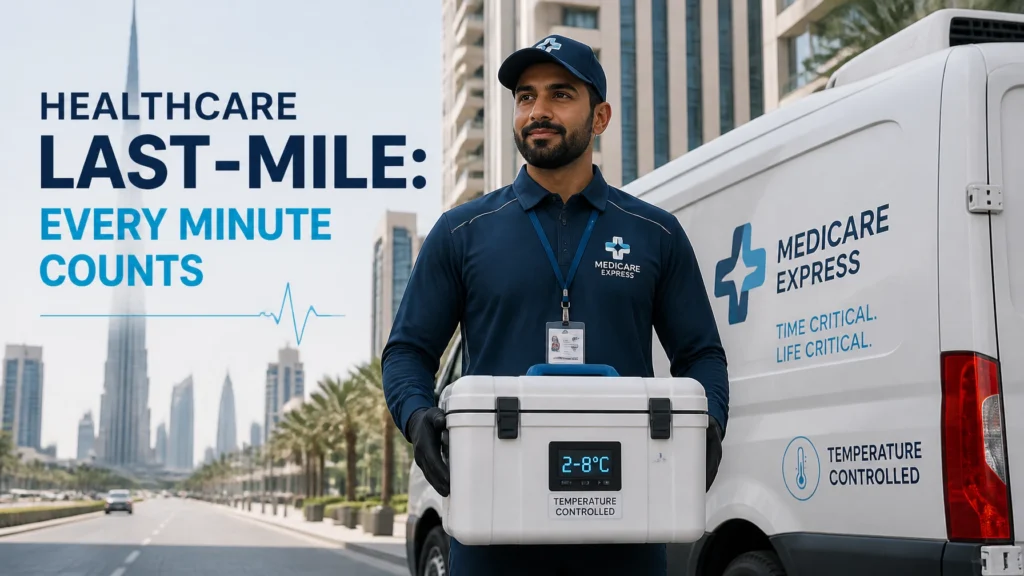
Lab sample transportation is the most volatile segment of healthcare logistics. Specimens often require specific thermal windows, such as 2–8°C or deep-frozen states. Failure to maintain these conditions leads to sample rejection and delayed diagnosis.
Thermal Integrity in Extreme Climates
Ambient temperatures in the GCC frequently exceed 40°C. Standard insulated packaging is insufficient for extended transit. Logistics teams must use validated cold-chain solutions. Real-time monitoring is required to detect thermal excursions before the sample is compromised.
Chain of Custody and Audit Trails
Manual logs are prone to error. Digital systems must track the sample from the point of collection to the laboratory bench. Use mobile applications to scan barcodes at every handover point. This creates an immutable audit trail. It ensures accountability for 3PL providers and internal fleets.

Medicine Delivery SLAs and High-Frequency Operations
Telemedicine and pharmacy e-commerce have shifted the delivery focus. The requirement has moved from bulk hospital resupply to high-frequency last-mile delivery to residential addresses. This shift introduces complexity in route density and time-window management.
Tight Delivery Windows
Medicine delivery SLAs often require 60-minute to 2-hour windows for urgent prescriptions. Failure to meet these windows disrupts treatment plans. Automated dispatching is necessary to balance these SLAs with driver utilization. For more details on managing high-frequency pharmacy operations, view the Medicina Group case study.
Proof of Delivery (POD) Requirements
Healthcare delivery requires more than a signature. It often involves identity verification and specialized handling instructions. Systems must support digital POD that captures GPS coordinates, timestamps, and recipient confirmation. This data is essential for billing and compliance.

Compliance and Temperature Monitoring Requirements
Regulatory bodies in the UAE and Saudi Arabia are tightening standards. Compliance with Good Distribution Practice (GDP) is now a market entry requirement rather than a differentiator.
IoT Integration
Passive data loggers are reactive. They only reveal a failure after the delivery is complete. Use active IoT sensors integrated with the logistics orchestration platform. These sensors provide real-time alerts for:
- Temperature deviations
- Humidity levels
- Door-open events
- Route deviations
Automated Compliance Reporting
Manual report generation is inefficient. Systems should automatically generate temperature excursion reports and delivery performance summaries. This reduces the administrative burden on logistics managers and ensures readiness for regulatory audits.

Digital Orchestration for Healthcare Providers
Adopting a unified logistics platform is the only way to scale healthcare delivery operations. Disconnected systems create data silos that lead to missed SLAs and increased costs.
Benefits of Unified Platforms
A unified platform connects the laboratory, the pharmacy, the dispatcher, and the driver.
- Visibility: Real-time tracking for patients and providers.
- Efficiency: AI-powered route optimization reduces fuel consumption and transit time.
- Scalability: Automated workflows allow teams to handle higher volumes without increasing headcount.
Healthcare providers using digital logistics systems report higher patient satisfaction and lower sample rejection rates. See how other organizations have transformed their delivery operations through orchestration.

Implementation Steps for Logistics Managers
Transitioning to a digital healthcare logistics model requires a structured approach. Follow these steps:
- Audit Current Equipment: Verify that all transport boxes and vehicles meet GCC temperature standards.
- Deploy IoT Sensors: Equip all delivery assets with real-time temperature and location trackers.
- Integrate Systems: Connect your LIS (Laboratory Information System) or ERP with a delivery management platform.
- Train Personnel: Ensure drivers and dispatchers understand the clinical importance of the items they carry.
- Monitor and Iterate: Use analytics dashboards to identify bottlenecks in your network and adjust routing parameters.
Healthcare logistics is a matter of time and temperature. Use technology to remove the margin for error.