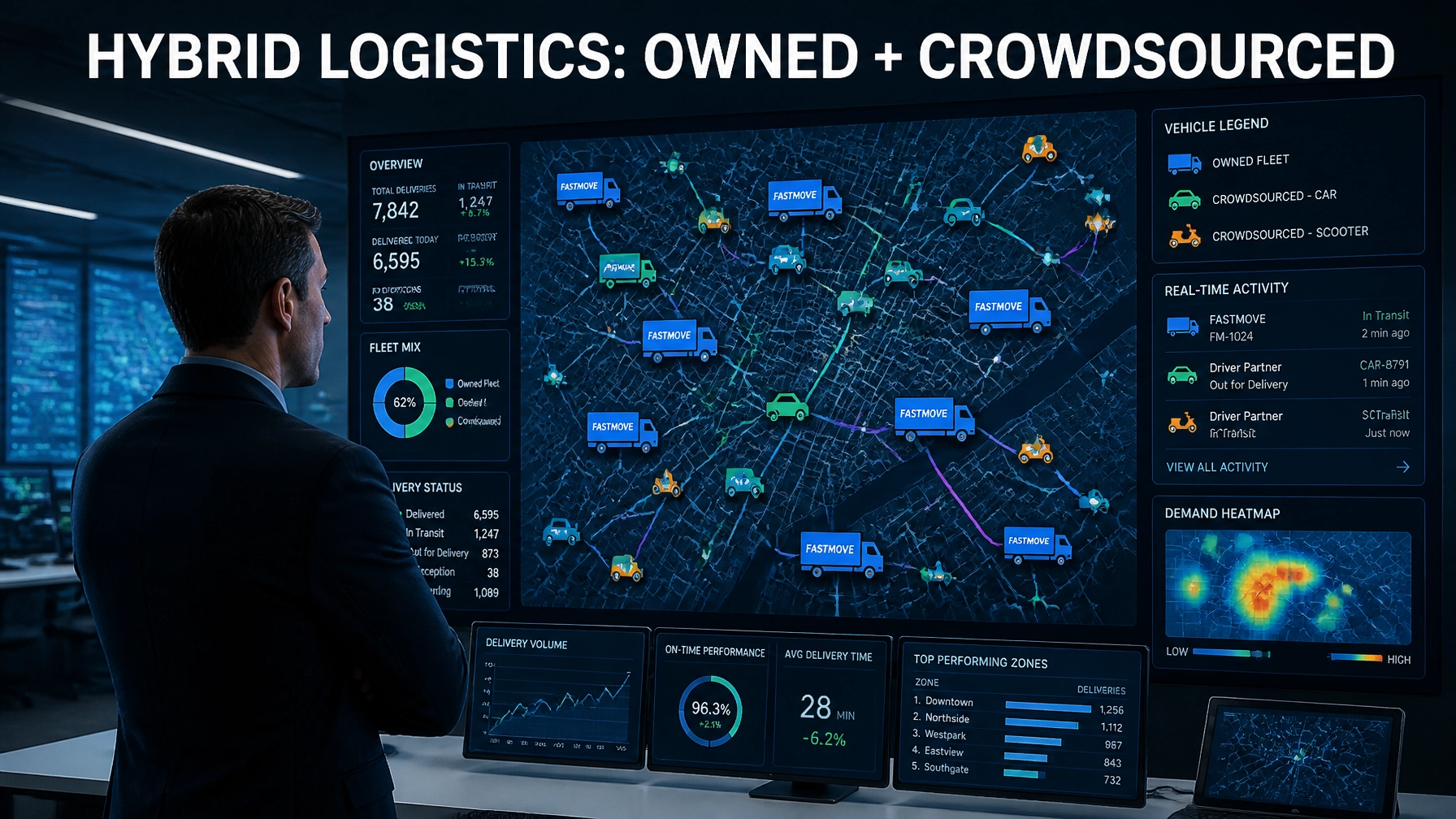
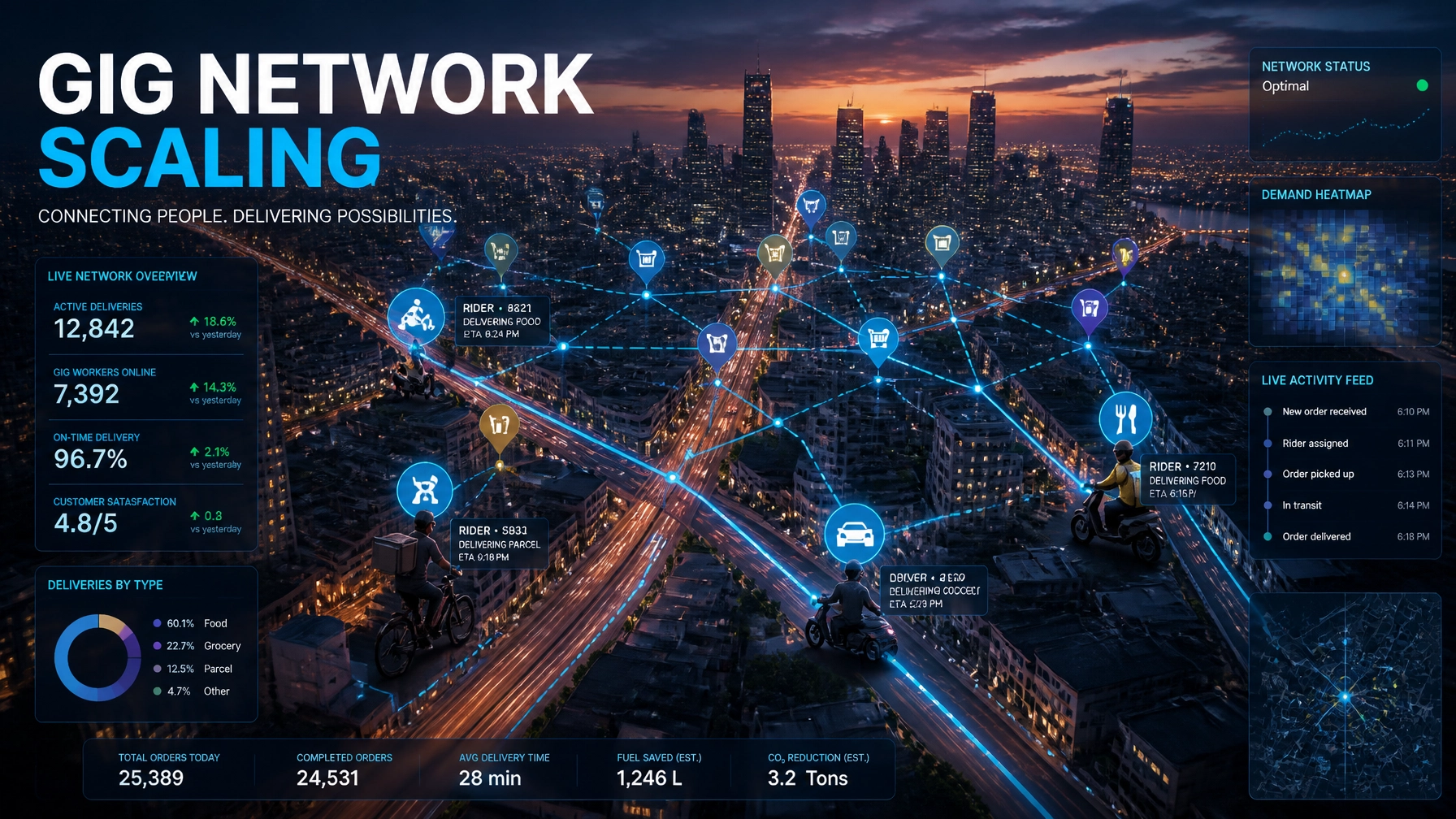
The Rise of Autonomous Dispatch: Why Logistics Teams Are Letting AI Make Delivery Decisions
Manual dispatching systems are no longer viable for high-volume logistics. Human planners cannot process the millions of data points generated per minute in a modern…
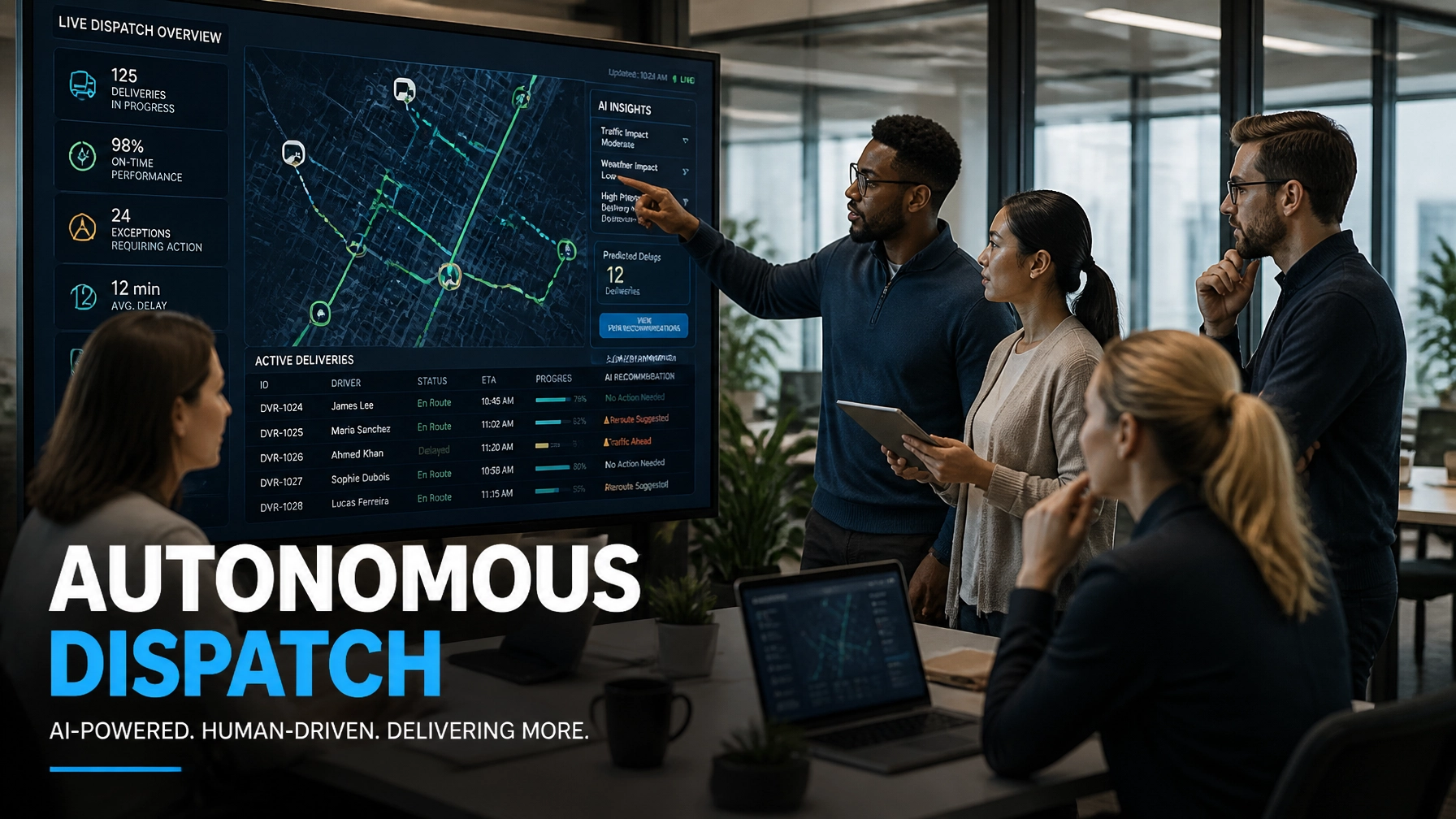
Manual dispatching systems are no longer viable for high-volume logistics. Human planners cannot process the millions of data points generated per minute in a modern supply chain. The industry is transitioning to autonomous dispatch. This shift is not theoretical. It is an operational necessity.
Manual Dispatch Failure at Scale
Manual dispatching operates on a linear scale. As the number of delivery stops increases, the cognitive load on human planners grows. This leads to system failure.
- Data Latency: Human planners rely on static data. By the time a planner adjusts a route based on a traffic report, the traffic condition has often changed.
- Cognitive Limits: A human can manage 20-30 drivers effectively. Beyond this, decision quality drops.
- Static Planning: Most manual systems use "plan-then-execute" workflows. This does not account for mid-route disruptions or new on-demand orders.
- Inconsistency: Dispatch decisions vary between staff members. One planner might prioritize cost, while another prioritizes speed. This leads to unpredictable SLA performance.
Traditional logistics platforms often provide tools for humans to plan. AI-native dispatch software removes the human from the routine decision-making loop.
The Mechanics of Autonomous Dispatch
AI dispatch software functions as an always-on optimization engine. It uses agentic AI to close the loop between planning and execution.
1. Data Ingestion
The system pulls real-time telemetry from multiple sources.
- GPS/Telematics: Live vehicle coordinates and speed.
- Order Pools: Inbound orders from ERP, Shopify, or custom APIs.
- Driver State: Available hours, remaining capacity, and historical performance metrics.
- Environmental Data: Real-time traffic, weather, and road closures.
2. Validation and Constraints
The AI validates every potential assignment against hard and soft constraints.
- Hard Constraints: Vehicle weight limits, refrigerated vs. dry van, and regulatory driver hours.
- Soft Constraints: Preferred driver zones, customer-specific delivery windows, and fuel efficiency targets.
3. Optimization and Decisioning
The engine runs metaheuristic algorithms, such as Adaptive Large Neighborhood Search (ALNS). It evaluates thousands of permutations in milliseconds. It selects the route that minimizes total cost while maximizing SLA adherence.
4. Direct Execution
Once a decision is made, the AI does not wait for approval. It pushes the assignment directly to the driver mobile app. The ERP is updated via webhook. No human intervention is required for the 80% of routine deliveries.
Balancing Cost, SLA, and Driver Utilization
Logistics is a balancing act between three conflicting variables. Autonomous systems optimize this triangle better than human intuition.
- Cost Reduction: AI reduces total mileage and fuel consumption by finding the absolute shortest path across a multi-drop sequence.
- SLA Protection: The system predicts potential late deliveries before they happen. If a driver is delayed, the AI automatically reassigns the next stop to a nearby driver to protect the promised time window.
- Driver Utilization: AI ensures drivers are not idle. It clusters orders based on density. This increases the "drops-per-hour" metric.
Sector Performance: Real-World Applications
Different industries require different AI logic. Fleetroot facilitates specialized orchestration for these sectors.
Retail and E-commerce
In retail, volume and density are the primary challenges. AI dispatch software manages the "peak-hour" surge without adding dispatch staff.
- Dynamic Clustering: Grouping orders by building or street level.
- On-Demand Injection: Inserting new orders into existing live routes.
- Customer Visibility: Providing live order tracking and accurate ETAs based on AI predictions.
Healthcare and Lab Logistics
Minutes matter in healthcare. Manual errors can result in sample spoilage or clinical delays.
- STAT Order Management: When a high-priority "STAT" sample is ready, the AI immediately reroutes the nearest courier.
- Sample Viability: The system tracks the "time-to-lab" constraint. If a sample is at risk of expiring, the AI triggers an emergency escalation.
- Compliance: Digital chain-of-custody is captured at every handoff.
Pharma and Cold Chain
Pharmacy logistics requires strict temperature monitoring.
- Reefer Matching: AI only assigns temperature-sensitive loads to vehicles with active, compliant cooling units.
- Excursion Alerts: If sensors detect a temperature breach, the AI can reroute the vehicle to the nearest depot for salvage.
- Case Study: See how Medicina Group optimized on-demand pharmacy deliveries using these principles.
Roadmap: What to Automate First
Do not attempt full autonomy on day one. Follow this utilitarian implementation sequence.
Phase 1: Automated Route Optimization
Replace manual route drawing with AI-generated plans. Keep a "human-in-the-loop" to review and approve the morning plan before dispatching. Use historical data to tune the algorithm's constraints.
Phase 2: Live Exception Management
Enable the AI to handle reassignments during the shift. If a driver breaks down or a customer cancels, let the system suggest the fix. This reduces the "firefighting" workload for dispatchers.
Phase 3: Fully Autonomous Dispatching
Set guardrails for routine deliveries. Allow the system to assign 90% of jobs directly to drivers. Humans should only receive alerts for "Edge Cases" or high-value VIP orders that require manual negotiation.
Integrating the Logistics Operating System
Autonomous dispatch cannot work in a silo. It requires deep integration across the tech stack.
- ERP Integration: Synchronize order data to prevent double-entry.
- WMS Connectivity: Ensure the dispatch engine knows exactly when a package is ready for pickup on the loading dock.
- Telemetry/IoT: Feed real-time sensor data back into the AI to inform the next dispatch decision.
Check the Fleetroot Case Studies to see how unified platforms outperform fragmented systems.
Summary: The New Standard
Manual dispatching is an accident of legacy processes. It was not designed for the speed of 2026 logistics. Transitioning to AI-driven, automated dispatching reduces operational costs and improves service reliability. Use the technical tools available. Start with route optimization. Move to autonomous execution.
See this in action on your own fleet.
14-day free trial. No credit card. Unlimited riders.